
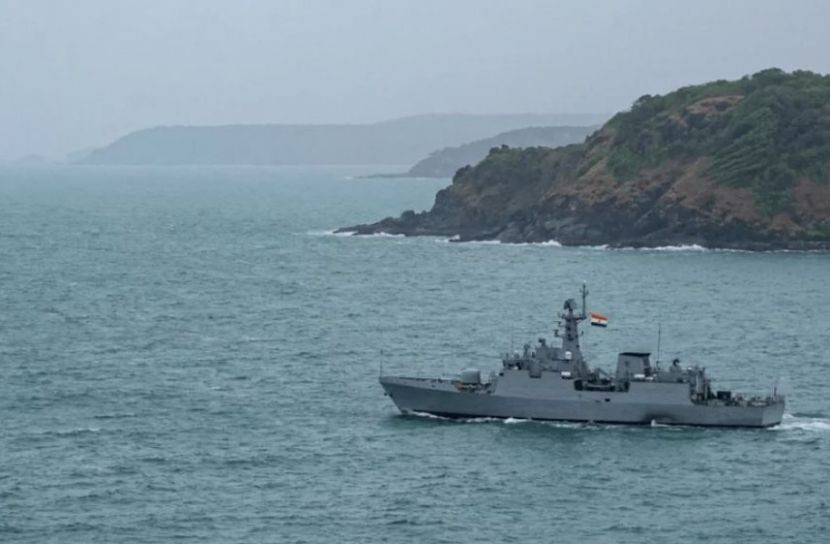
India has taken initiatives to increase its naval capabilities in the context of the expansion of China’s largest fleet and Pakistan’s addition to the Chinese-built modern attack submarine fleet. Within the next 10 years, the number of warships in the country’s navy has been set to exceed 200.
The South China Morning Post reports that China is building the world’s largest navy. Besides, Pakistan has also added advanced Chinese-made attack submarines to its fleet. In this situation, New Delhi’s concern about security in the Indian Ocean region has increased.
As part of this initiative, the stealth frigate INS Mahendragiri and anti-submarine warfare ship INS Malvan were inducted into the Indian Navy this month. Both ships are made in India. Through this, India is giving the message of expanding the fleet in its own capacity by reducing the dependence on foreign suppliers.
INS Mahendragiri was designed by the Indian Navy’s Bureau of Warship Design. Mazagon Dock Shipbuilders built it using about 75 percent indigenous materials. The project is seen as part of India’s efforts to achieve self-reliance in defense and critical industries.
It is the sixth Nilgiri class ship to be inducted into the Navy. The latest warship of this class, the seventh named Bindhyagiri, will join the fleet in the next few months. Another seven to eight ‘next generation’ warships (codenamed Project-17 Bravo) are already in the waiting queue.
The current number of ships in the Indian Navy is around 150. About 135 of these are believed to be front-line warships such as frigates, destroyers and submarines. About 50 more are under construction.
Sanjay Mishra, a former rear admiral of the Indian Navy and a current defense analyst, said, ‘Since its fleet will consist mainly of indigenously built ships, the Navy’s target of 200 ships by 2035 is achievable. Given the right incentives, we can surpass this number too.’
Mishra said that in the current strategic context, India now needs at least two highly mobile and self-sufficient fleets to be permanently ready. However, significantly more and supporting ships will be required to secure this position.
To meet the demands of the situation, the Indian Navy is increasing the pace of ship induction, adding a new warship to the fleet every six weeks or so. In the last one and a half months alone, they have commissioned five ships made with indigenous materials and technology.
But critics point to several obstacles that stand in the way of achieving this goal. India is currently heavily dependent on imported specialized steel and other components. In addition, the country’s chaotic domestic supply chain and aging shipyard infrastructure are hampering the achievement of the target.
TimesBD/ rabbi