
The government has taken the initiative of forming a new state-owned Shariah-based bank by merging five distressed private Islamic banks. Administratively, the preparations for the new journey are almost over, but the financial reality says that tough challenges lie ahead. The central bank’s latest Forensic Audit and Asset Quality Review (AQR) has revealed a picture of non-performing loans, huge capital shortfalls and acute liquidity crunch, which is seen as a big warning for Bangladesh’s banking sector. According to Bangladesh Bank’s assessment, the effects of long-standing irregularities, poor governance, opaque credit disbursement and embezzlement were so profound that it was almost impossible to sustain the five banks individually. In that reality merger was chosen as the restructuring strategy. Disbursed loans are considered as the main assets of the banks in distressed banks due to defaulted loans. But in the case of these five institutions, much of that wealth is now virtually non-performing. According to forensic audit data, about 96 percent of First Security Islami Bank’s loans have turned into risky or bad loans. In Union Bank, this rate is around 98 percent, which is the highest. More than 95 percent of Global Islami Bank’s loans are at risk. About 62 percent of Social Islami Bank’s (SIBL) and about 48 percent of Exim Bank’s loans are also marked as non-performing. As a result, even if there are assets on paper, in reality the possibility of getting money back from these loans is very limited. This has affected the capital capacity of banks. Collectively, the capital shortfall is now over Rs 1.5 lakh crore. Banks’ financial crisis has had the biggest impact on depositors, who have suffered the most from the liquidity crisis. For a long time many customers have been suffering from not being able to withdraw the required amount. Retired workers, expatriates, small entrepreneurs and traders complained that they could not withdraw their money from the bank on time even for emergencies such as medical, family needs, business expenses or payment of workers’ salaries. According to experts, when the trust among the customers in the bank decreases and everyone starts withdrawing money together, then the situation is known as ‘bank run’. Such was the situation in these five banks. Bangladesh Bank has given special liquidity assistance of around Tk 27 thousand crores in several rounds to deal with the crisis, but the situation has not improved permanently. What is the roadmap for restructuring? Bangladesh Bank has drawn up a restructuring plan around the new ‘Combined Islami Bank’. The key aspects of the plan are – paid up capital formation of Rs 35 thousand crores. Establishment of new board of directors and professional management. Integrated Information Technology (IT) platform launched. Establishing a centralized risk management system. Implementation of step-by-step default loan recovery program. Normalize customer service and liquidity situation. As per the plan, capital assistance of Tk 20,000 crore will be provided by the government through cash and sukuk bonds. The remaining 15 thousand crore rupees are planned to be raised through capital conversion under certain policies. Bangladesh Bank’s Expectations Bangladesh Bank’s Executive Director and Spokesperson Arif Hossain Khan said that the new Managing Director has taken charge and the restructuring program is being taken forward step by step. According to him, this will be the only Shariah-based bank owned by the government in the country. If good governance is ensured considering people’s interest and trust in Islamic banking, the new institution can go to a strong position in the future. He also said that the central bank will continue to provide policy support as per the need. Government’s assurance for depositors The Finance Minister told the National Parliament that there will be no deduction in the deposits or profit earned by the customers. The government is hopeful that depositors will get their money back in full once the restructuring is completed. Besides, by repealing the controversial provisions of the Bank Reorganization Act, the owners involved in irregularities in the past have been stopped from regaining control of the bank. At the same time, forensic investigations are ongoing against those involved in fraud and embezzlement. Technological integration is also a big challenge According to banking experts, bringing core banking software, customer data, loan accounting, branch management and accounting systems of five separate institutions on one platform is not an easy task. A former bank managing director said that such technological integration in different countries of the world took one to two years. Long-term planning will be required to successfully complete this process in Bangladesh as well. The former chief economist of the World Bank warned experts. Zahid Hossain thinks that in international experience usually a weak bank is merged with a strong bank. But here five troubled banks are being consolidated, which is inherently risky. According to him, the capital assistance proposed by the government is positive but limited compared to the existing capital shortfall. So the real solution in the long run will be to recover the money embezzled through irregularities and fraud and bring those responsible to account. Key to success will be customer trust According to analysts, the new bank’s biggest asset will be customer trust. Regular withdrawal facilities, online banking, ATMs, remittances, LCs and other services can be restored only if they remain uninterrupted. According to them, the crisis will not be solved with a new name, a new logo or a new board of directors. Real success will depend on ensuring good governance, transparency, financial discipline and seamless service to customers. Experts believe that the first few months after the combined Islamic bank’s operations will determine whether the merger truly lays the groundwork for recovery, or is merely an administrative move to transfer old crises to a new structure. Times BD/ Zaman
Source link
Related Posts
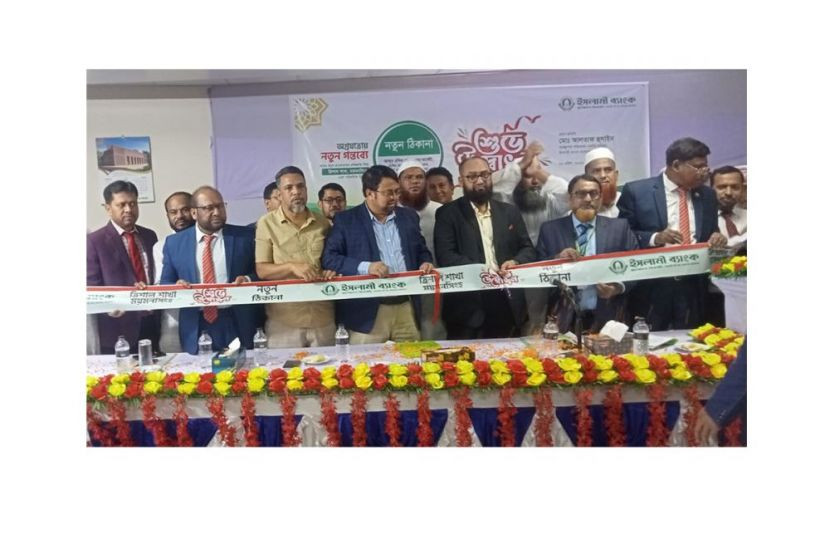
Transfer of Islami Bank Trishal branch
Trishal Branch of Islami Bank Bangladesh PLC has been shifted to Abdur Rashid Chairman Market, Holding No. 4170, Main Road,…

Stock Market Hits Record High Amid Economic Recovery
Habitasse curabitur eget himenaeos ut est morbi torquent ornare interdum erat curae aliquet, pulvinar ultrices iaculis netus rhoncus purus arcu…

Corporate tax coming down, e-TIN not required to open accounts
In the proposed budget of the financial year 2026-2027, the corporate tax rate is kept unchanged in the case of…